Page
The Blessing of Adversity
Completion requirements
One of the most significant yet underappreciated aspects of leadership is learning to navigate adversity. Often, leadership development programs or educational institutions don’t prepare leaders for the tests and trials that will inevitably come their way. However, it is these very trials that shape a person into either a strong leader or an ineffective one. The ability to endure and learn from adversity is what differentiates great leaders from the rest.
I see this pattern in great leaders. Wherever there is a great promise, wherever there is a great destiny, wherever there is a great call on somebody’s life, there is an incredible testing and trial that comes into their lives. I don’t think I've known one great man or woman of God that hasn’t gone through testing and trials in a severe way.
-Alex Seeley
Adversity serves a critical purpose in refining leaders, much like how God uses trials to sharpen His people, like arrows in His quiver, to hit the mark. These challenges may feel like a punishment, but they are actually opportunities for growth. Early in life, many leaders might view trials as evidence that something has gone wrong. It’s common to wonder, “What did I do to deserve this?” Yet, as time goes on, leaders come to realize that these trials are not meant to tear them down, but to build them up, molding them into the leaders God has called them to be.
As leaders, we must prepare ourselves for the reality that we will experience betrayal, injustice, misunderstandings, and failure. The path of leadership is not a straight line. It is winding and unpredictable. There is no textbook method for dealing with these experiences, as each trial is unique. However, every trial is an opportunity for growth, if we allow it to shape us. Scripture offers countless examples of God’s people facing adversity, and these individuals either rose to greatness or succumbed to bitterness. Leaders should be aware of these examples and learn from them.
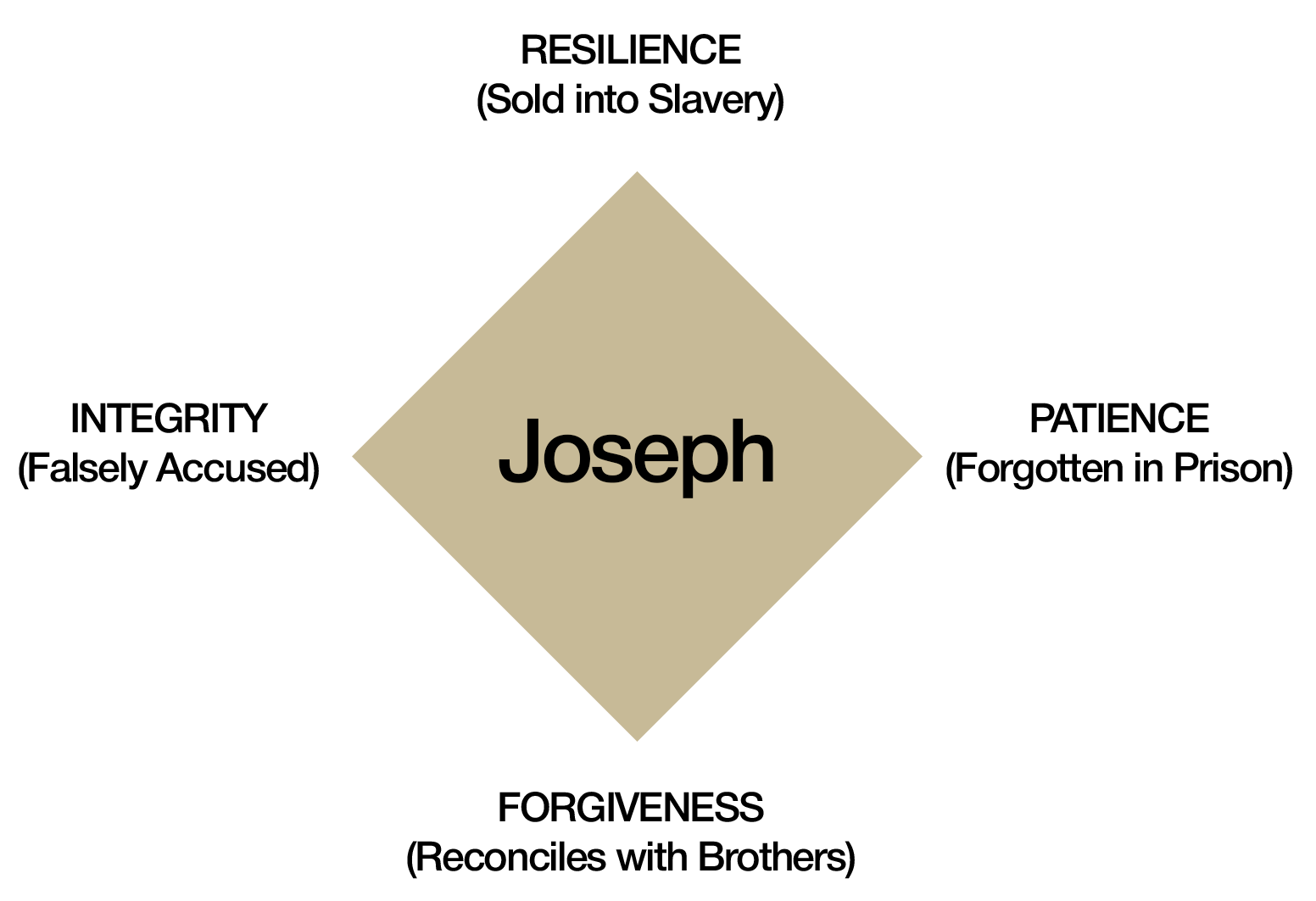
A prime biblical example of a leader shaped by adversity is Joseph. His story is a testament to how God uses trials to prepare leaders for greatness. Joseph, the favored son of Jacob, was given dreams that foretold his future as a leader. However, his journey to realizing that dream was fraught with trials. He was betrayed by his brothers, sold into slavery, falsely accused, and imprisoned. At first glance, these experiences seemed to be the opposite of the grand future Joseph had envisioned. Yet, God used these trials to refine Joseph and prepare him for his ultimate purpose.
Psalm 105:16-19 offers a profound insight into Joseph’s story: “He called down famine on the land and destroyed all their supplies of food. And he sent a man before them – Joseph, sold as a slave. They bruised his feet with shackles. His neck was put in irons, till what he foretold came to pass, till the word of the Lord proved him true.” This passage reveals that God had allowed Joseph’s trials not as a form of punishment, but as a means of preparation. Joseph’s journey of betrayal and injustice was part of God’s plan to make him the great leader he was destined to be. It was the adversity that tested and proved his character, sharpening him for his future role as the prime minister of Egypt.
It’s important to note that while God uses adversity to refine us, He is not the source of all suffering. God does not cause sickness, abuse, or other forms of evil. However, He can use the injustice, betrayal, and challenges we face to shape us into more Christlike leaders. For every great calling, there is often a season of intense testing. This pattern is seen not just in Joseph’s life, but in the lives of all great leaders throughout history, both biblical and modern.
Adversity is what makes leaders contrite and dependent upon God. Without trials, it’s easy to fall into the trap of self-reliance, believing that we can accomplish everything in our own strength. However, adversity breaks down our pride and forces us to lean on God. This dependence on God is a hallmark of great leadership, as it aligns the leader’s will with God’s purpose.
Returning to Joseph’s story, we see a young man who, at the beginning of his journey, was eager to share his dreams and assert his future importance. This eagerness was not tempered by experience, and Joseph's sharing of his dreams only fueled his brothers’ jealousy. In time, Joseph’s character was refined through the trials he faced in Egypt.
He was sold into slavery. Then, he excelled in Potiphar’s house. Then, he was imprisoned for a crime he didn’t commit. Through all these events, Joseph didn’t allow his circumstances to dictate his behavior. Instead of becoming bitter or vengeful, he excelled even in the most undesirable situations, eventually rising to positions of influence in both Potiphar’s house and in prison.
You can choose to be better or to be bitter.
-Alex Seely
Joseph’s time in prison is particularly instructive. Despite the unfairness of his situation, Joseph remained faithful, using his gifts to serve others, even in the lowest of places. He interpreted the dreams of fellow prisoners, the baker and the cupbearer, which eventually led to his release and promotion. This faithfulness in adversity is a key characteristic of great leaders. God sees how we respond in difficult circumstances, and it is often in those hidden places that He refines our character and prepares us for greater responsibilities.
One of the greatest tests Joseph faced came after his rise to power when his brothers came to Egypt seeking food during the famine. Joseph had the power to take revenge on them for betraying him years earlier. Instead, he chose forgiveness. Genesis 50:20 captures the essence of Joseph’s leadership: “You intended to harm me, but God intended it for good to accomplish what is now being done, the saving of many lives.”
This response shows Joseph’s understanding of God’s broader plan. He realized that his trials were not about him but about God’s purpose to preserve life. This realization is crucial for any leader because it shifts the focus from personal success to serving the greater good.